



1099 Reporting Automation for Healthcare Payers – Reduce Errors, Stay Compliant, and Scale with Confidence
For healthcare payers, 1099 reporting is no longer a routine year‑end task. It has become a high‑risk compliance function, driven less by form complexity and more by the growing regulatory and financial consequences of errors.
Between 2024 and 2026, the IRS significantly increased scrutiny on information returns, introducing changes that directly impact payers managing large volumes of provider payments:
- Mandatory electronic filing for organizations submitting 10 or more returns (effective 2024)
- Per-form penalties range from $60 to $680 based on filing timeliness and correction status, with maximum penalties applied in cases of intentional disregard.
For healthcare payers issuing thousands or tens of thousands of 1099s, even a modest error rate can quickly translate into material financial exposure, audit risk, and operational disruption.
What Is 1099 Reporting Automation?
1099 reporting automation refers to the use of technology to manage and control the full lifecycle of information returns, including:
- Provider payment data consolidation and validation
- IRS TIN and name matching
- W‑9 collection and management
- Federal and state‑level filing orchestration
- Error correction and IRS notice workflows
For healthcare organizations operating at scale, automation is no longer optional. It is required to manage volume, compressed timelines, and increasing regulatory complexity without introducing avoidable risk.
Why Manual 1099 Processes Fail And Why the Impact Is So High
1. Errors Scale Per Form, Not Per File
IRS penalties are assessed per return, not per batch. For payers filing thousands of forms, a small percentage of errors can result in six‑figure penalty exposure.
Manual processes simply do not scale with this level of risk tolerance.
2.TIN Mismatches Are the Primary Penalty Driver
Unresolved TIN and name mismatches often lead to:
- IRS CP2100 notices identifying TIN/name mismatches
- Required B-Notice solicitations to affected payees
- Escalation to higher per‑form penalties if not corrected
- Costly remediation cycles across multiple internal systems
Without automated matching and validation, these issues typically surface after filing—when correction is most expensive.
3. Filing Timelines Leave No Margin for Error
For 1099‑NEC forms:
- Filing deadline is January 31 or the next business day when the deadline falls on a weekend
- There is no automatic extension window for data validation
This means provider data must be accurate before year‑end, not during a post‑filing cleanup process.
4. The E‑Filing Mandate Removes Manual Fallbacks
As of 2024, organizations filing 10 or more information returns must e‑file.
For healthcare payers, this eliminates manual workarounds entirely. Validation, formatting, and submission must be correct the first time—at scale.
Key Capabilities of an Automated 1099 Solution (Mapped to Risk Reduction)
1. Pre‑Filing Data Validation
Automated validation reduces the risk of:
- TIN/name mismatches
- Incomplete or inconsistent provider records
When integrated with centralized provider data management, this creates a clean, continuously validated data foundation ahead of filing deadlines.
2. Automated W‑9 Collection and Maintenance
Automation enables:
- Proactive W‑9 outreach
- Standardized data capture
- Reduction of missing or outdated taxpayer data
This minimizes downstream corrections and supports compliance before payment activity occurs.
3. Filing Orchestration Across Jurisdictions
An automated solution can manage:
- Federal filing requirements
- State‑specific thresholds and deadlines
- IRS‑mandated e‑file formats
This orchestration reduces operational friction and compliance gaps without manual tracking.
4. Error Resolution and IRS Notice Management
Automation supports structured workflows for:
- CP2100 response handling
- Corrections and re‑filings
- Audit documentation and traceability
Instead of reactive crisis response, payers gain controlled, repeatable remediation processes.
Business Impact for Healthcare Payers
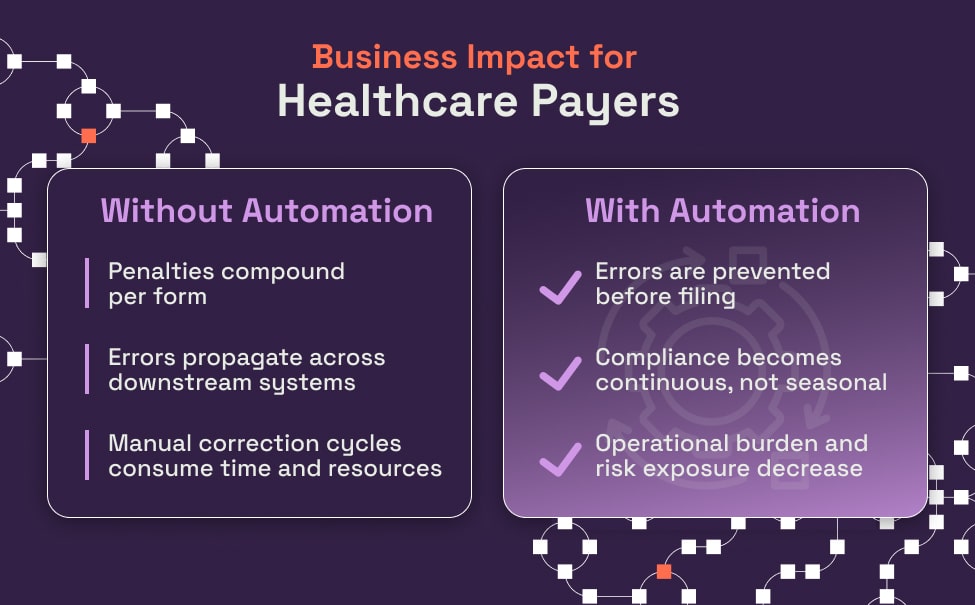
Without automation:
- Penalties compound per form
- Errors propagate across downstream systems
- Manual correction cycles consume time and resources
With automation:
- Errors are prevented before filing
- Compliance becomes continuous, not seasonal
- Operational burden and risk exposure decrease
Conclusion
1099 reporting is no longer just a tax filing exercise. For healthcare payers, it is a data governance, compliance, and risk management discipline.
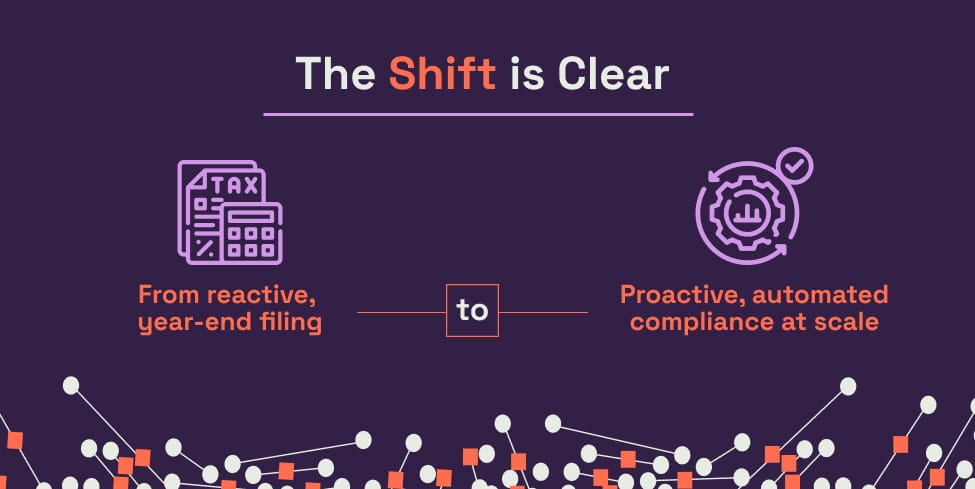
Connect with us to assess your 1099 readiness before the next filing cycle exposes hidden risks. Early validation and automation can significantly reduce both compliance exposure and operational stress.
Frequently Asked Questions (FAQs)
What happens if a healthcare payer files incorrect 1099 forms?
The IRS assesses penalties per form, not per batch. Incorrect or late filings can result in penalties ranging from $60 to $680 per return, with higher penalties for intentional disregard. Errors identified after filing typically require costly corrections and IRS notice responses.
Why is 1099 reporting especially challenging for healthcare payers?
Healthcare payers manage high volumes of provider payments, complex data flows, and compressed filing timelines. Manual processes struggle to scale while maintaining accuracy across federal and state reporting requirements.
What is the most common cause of 1099 penalties?
TIN and name mismatches are the most frequent trigger for IRS notices and penalties. Without automated TIN matching and pre‑filing validation, these issues often surface after submission when correction costs are highest.
Is electronic filing mandatory for 1099s?
Yes. As of 2024, organizations filing 10 or more information returns must submit them electronically. This requirement eliminates manual filing options for most healthcare payers.
When should healthcare payers start preparing for 1099 reporting?
Preparation should begin well before year‑end. Because there is no extension for 1099‑NEC filing, provider data must be validated and complete before the calendar year closes.
How does 1099 automation reduce compliance risk?
Automation helps prevent errors before filing through continuous data validation, automated W‑9 collection, structured filing workflows, and systematic error resolution reducing reliance on last‑minute manual fixes.