



Prior Authorization: Discovering the Technology Potential

Prior authorization requirements are important to smart medical cost and patient care management. Yet, the current processes can be burdensome and complex. Learn how electronic prior authorization and automation technologies can help insurers overcome prior authorization challenges and enhance the member experience in this blog.
Smart Data Solutions, in collaboration with Everest Group, had an insightful discussion on discovering the technology potential of prior authorization. Watch the LinkedIn Live session here.
Prior authorization, the process healthcare providers follow to obtain payer approval before providing certain medical services or medications to a patient, is rapidly undergoing digital transformation. Ongoing industry efforts aim to streamline and improve prior authorization, balancing the need for controlling cost and reducing healthcare provider administrative complexity. Let’s explore this further.
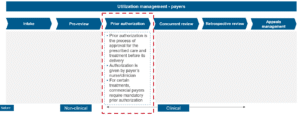
Existing process complexities driving the need for electronic prior authorizations
The rising importance of technology in prior authorization can be attributed to its increasing prominence in controlling cost, preventing unnecessary services, detecting fraud, preventing abuse, and managing specialty medications among other key benefits.
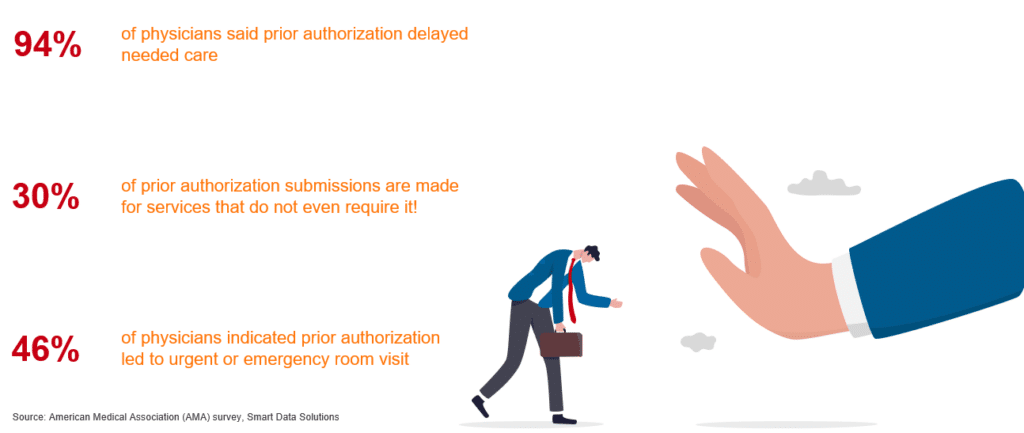
Prior authorization denials, appeals, and re-submissions, along with the time spent on documenting and processing the medical necessity, add to healthcare payers’ and providers’ overall costs as patients shift to other emergency services. Moreover, prior authorization also increases the growing gap among physicians in providing timely care. The graphic below captures results from a recent survey about prior authorization challenges.
Increased patient volume has amplified the need for electronic prior authorization. The current processes involve many complexities such as:
- Manually intensive procedures
- Inconsistent rules
- Varying submission requirements
- Susceptibility to errors and delays
- Limited electronic adoption
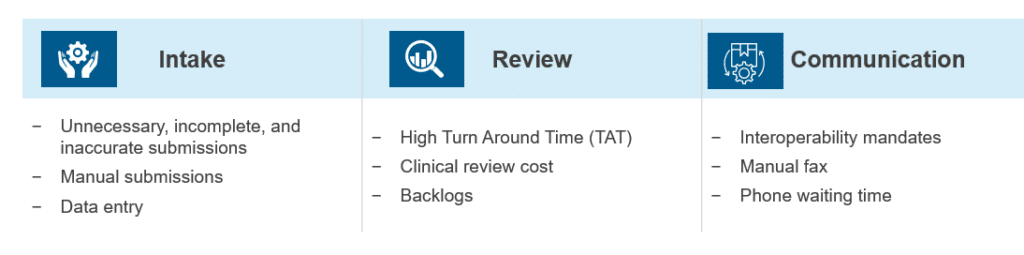
Broadly, the challenges payers face can be categorized into three major steps involved in prior authorization: intake, review, and communications, as illustrated below:
Key trends shaping the industry
Addressing these prior authorization challenges requires a technological solution that enables collaboration between payers and providers. The industry is being shaped by the following key trends which aim to eliminate manual processes and introduce automation and interoperability into the system:
- Electronic Health Records (EHR) integration: By incorporating up-to-date information from EHRs, healthcare payers can make informed decisions about the medical necessity of certain procedures or treatments
- Interoperability initiatives: Achieving interoperability between different healthcare IT systems, as well as payers and providers, enables smoother data exchange during the prior authorization process
- Real-time approvals: Programs for real-time approvals of certain high-risk, rare disease, or emergency care areas can reduce delays and ensure timely access to necessary care
- Streamlining transparency and appeals processes: The Centers for Medicare & Medicaid Services (CMS) has launched initiatives to enhance transparency, including providing clear information to patients and healthcare providers about prior authorization requirements, criteria, and expected timelines
The role of technology in the ecosystem
As payers move towards enhancing member experience, technology has risen to the forefront of the conversation. CMS has started working on changing rules for government-sponsored healthcare plans “to improve the electronic exchange of healthcare data, and streamline processes related to prior authorization.”
Technology can play a pivotal role in the various stages of the prior authorization lifecycle:
- Intake: Automating this costly process is critical and continues to drive payers and providers looking to reduce incorrect submissions, extract data from large volumes of manual submissions, and facilitate data entry.
- Review: Significant investments have been made in Artificial Intelligence (AI) and analytics solutions, including intelligent document processing and reviewing, automating optical character recognition (OCRs), and eliminating manual medical review.
- Communication: The industry has focused on providing platform solutions with common portals for extending payer and provider communications, and interoperability mandates such as rule engines to reduce turnaround time.
Additional requirements include using AI and natural language processing (NLP) technologies to extract data from electronic health records (EHRs) and enhance the patient and member experience.
Authors:
Gokul Janardhan, Senior Analyst, Everest Group
Priya Sahni, Practice Director, Everest Group
We are sharing this blog from leading research firm Everest Group guest bloggers Gokul Janardhan and Priya Sahni.