



To Bundle or Not to Bundle Your Pharmacy Benefits?
The Operational Perspective That Matters More Than You Think
Pharmacy benefits have become one of the most important strategic levers for health plans and employers. Rising prescription drug costs, the rapid growth of specialty medications, increasing utilization management requirements, and evolving pharmacy benefit manager (PBM) models are forcing organizations to rethink how pharmacy benefits are structured.
One question increasingly dominates these discussions: Should pharmacy benefits be bundled with medical benefits under a single vendor, or unbundled and managed separately?
Most debates focus on financial considerations such as rebate structures, pricing transparency, and contracting flexibility. However, an equally important dimension is often overlooked; the operational infrastructure required to support either model.
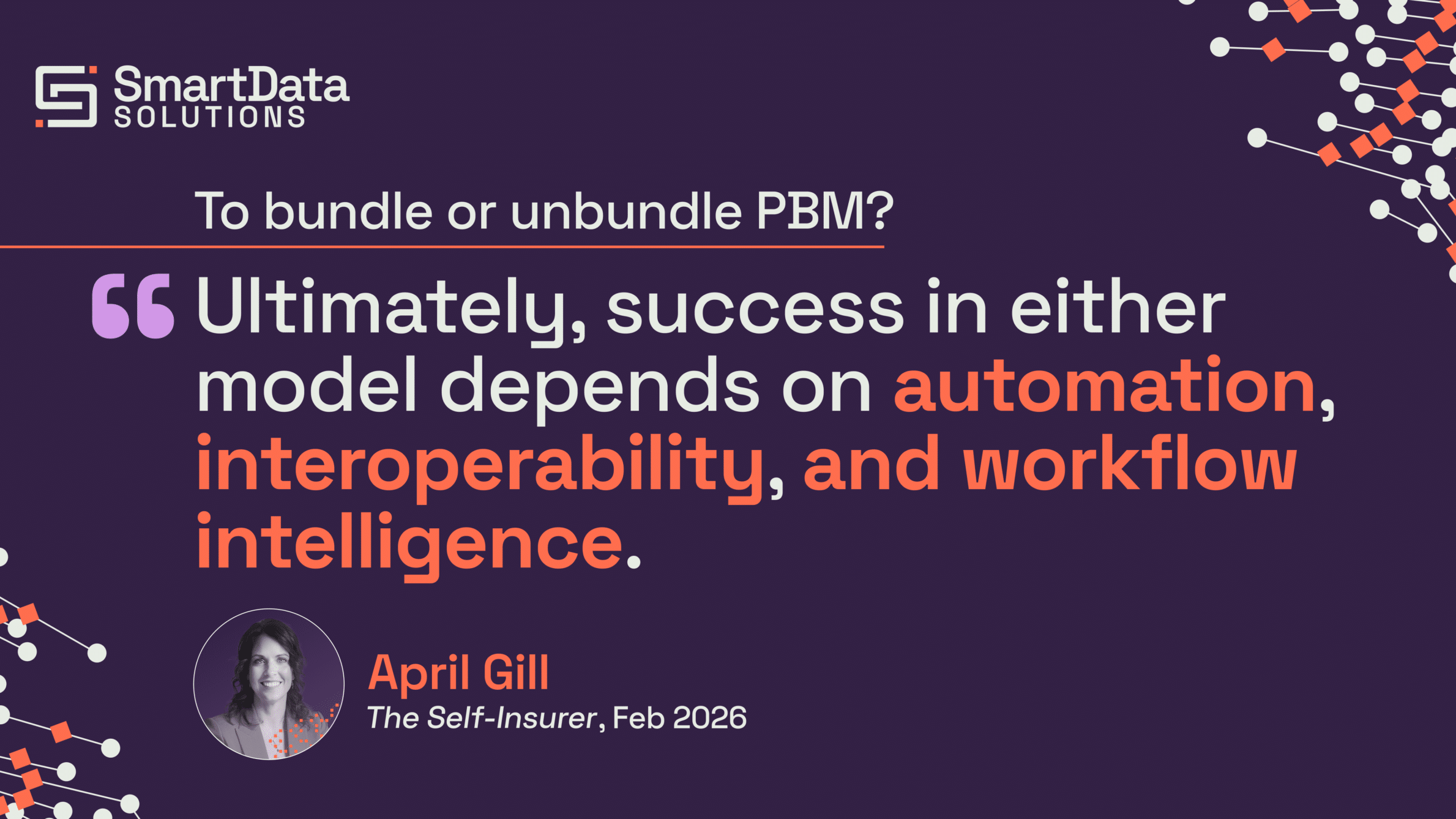
Whether pharmacy benefits are bundled or unbundled, success ultimately depends on how effectively organizations manage the operational complexity behind pharmacy claims, prior authorization workflows, clinical documentation, and vendor coordination.
In other words, strategy defines direction, but operational infrastructure determines whether the strategy actually works.
Why Pharmacy Benefit Strategy Matters
The Decision Is Strategic; but the Impact Is Operational
Every day, millions of pharmacy claims move across payer ecosystems: prior authorizations requests, clinical attachments, appeals, communications, network interactions, and more.
The operational impact of these claims is immense, and the choice to bundle or unbundle pharmacy benefits directly influences:
- The number of systems involved
- The diversity of data standards and formats
- The volume of documents exchanged
- The speed of cross-vendor coordination
- The risk of delays, errors and rework
- The downstream member and provider experience
As you contemplate whether to bundle or unbundle, consider these operational impacts. Are you able to implement your desired strategy without creating administrative drag, compliance risk, or member friction? If not, then you should tackle the operational requirements first so your strategy can be effective.
Let’s dig deeper into each strategy, and the operational advantages and trade-offs you’ll need to consider.
Bundled Pharmacy Benefits: Operational Advantages and Tradeoffs
Bundling pharmacy and medical benefits under a single vendor is often associated with administrative simplicity and tighter clinical coordination. Most modest but meaningful reductions in medical utilization and total cost of care when pharmacy and medical data are aligned within one system, particularly for members with chronic conditions.
These reductions are caused by a variety of operational advantages, such as:
- Unified data flow: One adjudication engine, one rules framework, one source of truth.
- Simplified prior authorization workflows: Medical and pharmacy histories accessible within the same platform
- Fewer integration points: Reduced vendor handoffs and reconciliation efforts.
However, there are also substantive risks that may result in unwanted operational complexity. This includes:
- Limited transparency: Pricing logic, rebate flows, and cost drivers may be obscured
- Vendor lock-in: Switching vendors or adapting benefit design becomes more complex.
- Technology dependency: If the bundled vendor’s platform is technology is outdated or inflexible, inefficiencies scale quickly.
So, while bundling can reduce operational friction leading to some positive outcomes, centralizing control does not necessarily improve underlying process intelligence.
Unbundled Pharmacy Benefits: Control, Customization, and Complexity
Unbundling, on the other hand, is frequently pursued to gain pricing transparency, negotiating leverage and best-in-class vendor selection. Heightened regulatory scrutiny and public reporting have further amplified interest in unbundled models.
Operational advantages with unbundled PBM include:
- Vendor specialization: Payers select PBMs, UM vendors and specialty partners independently.
- Greater visibility into cost drivers: Clear insight into formulary decisions, spread pricing and utilization patterns.
- Tailored benefit design: Solutions can be optimized for specific populations or lines of business.
And here’s a rundown of the challenges:
- System fragmentation: Multiple platforms must remain synchronized in near real time.
- Increased document and data volume: Clinical records, Prior Authorization requests, appeals and claims traverse multiple routes
- Coordination risk: Without strong governance responsibility gaps emerge between vendors.
Overall, while vendor transparency and expertise have clear advantages and administrative burden rises sharply when workflows are not integrated. To that end, going with an unbundled solution largely depends on the operational maturity of your organization and your ability to prevent bottlenecks.
Automation Determines Which Model Succeeds
Whether bundled or unbundled, operational readiness is the true success factor.
For example, organizations with strong automation and interoperability consistently outperform peers on speed, accuracy, and scalability. Automation ensures the strategic choice to bundle or unbundle doesn’t result in administrative drag.
Key automation and interoperability capabilities that support both bundled and unbundled models include:
- Intelligent Omni-Channel Intake: Automated ingestion and normalization of prior authorization, appeals and grievances, and claims information across intake systems.
- Intelligent Medical Records: AI-driven summarization that surfaces relevant clinical context for pharmacy reviews, medical necessity and case management decisions, and quality and compliance workflows.
- Automated Classification and routing: Ensures documents or transactions reach the right system or vendor without manual triage.
- Contract and Provider Data Management: Reduces leakage and vendor misalignment.
- Cross-Vendor Workflow Alignment: Maintains continuity even when pharmacy and medical systems are separate.
A Practical Framework for Choosing a Model
If you are considering bundling your pharmacy and medical benefits, ask the following questions:
- Will we retain visibility into pricing and utilization drivers?
- How flexible are workflows if our strategy changes?
- Does the vendor’s technology evolve at the pace of our needs?
If you are considering an unbundling strategy, then ask:
- Do we have the automation backbone to manage complexity?
- How will data remain synchronized?
- Can we prevent delays in PA, appeals, and claims resolution?
Conclusion: Strategy Sets the Direction, Infrastructure Sets the Speed
Bundling or unbundling pharmacy benefits is an important strategic decision; but its impact and success are felt and measured operationally.
With intelligent automation, integrated data, and aligned workflows, either model can succeed. Without that foundation, even the best-intentioned strategy will struggle under administrative weight.
In short, the model matters. But the infrastructure matters more.
Evaluate Your Pharmacy Benefit Operations
Contact us to learn how intelligent automation helps payers manage pharmacy workflows regardless of bundling strategy.
Frequently Asked Questions
1. What operational challenges arise when choosing between bundled and unbundled pharmacy benefits?
Deciding whether to bundle or unbundle pharmacy benefits is more than just being a financial strategic consideration. It’s a serious operational challenge because it directly affects the number of systems, data formats, document exchanges, speed of coordination, and the overall experience for members and providers.
2. What are the key advantages and risks of bundling pharmacy benefits with medical benefits?
Bundling offers streamlined data flow, simplified workflows, and fewer integration points. However, it may reduce transparency, increase vendor lock-in, and amplify inefficiencies if the vendor’s technology is outdated or inflexible.
3. How does unbundling pharmacy benefits impact operational complexity?
Unbundling allows for greater vendor specialization and transparency, but introduces unique challenges, such as system fragmentation, higher data and document volumes, and increased coordination risks. This can result in administrative bottlenecks if not managed with automation.
4. Why is automation critical to the success of both bundled and unbundled models?
Automation and interoperability are essential because they enable speed, accuracy, and scalability while reducing administrative burden. This ensures that the chosen benefits model does not lead to inefficiency or delays.
5. What variables should payers consider when choosing between bundling and unbundling?
Payers should assess their visibility into cost drivers, technology flexibility, and operational readiness for automation. Data synchronization and authorization and claims ensure the selected model is feasible and effective.